This is the archive page

What qualifies for First Year Allowances?

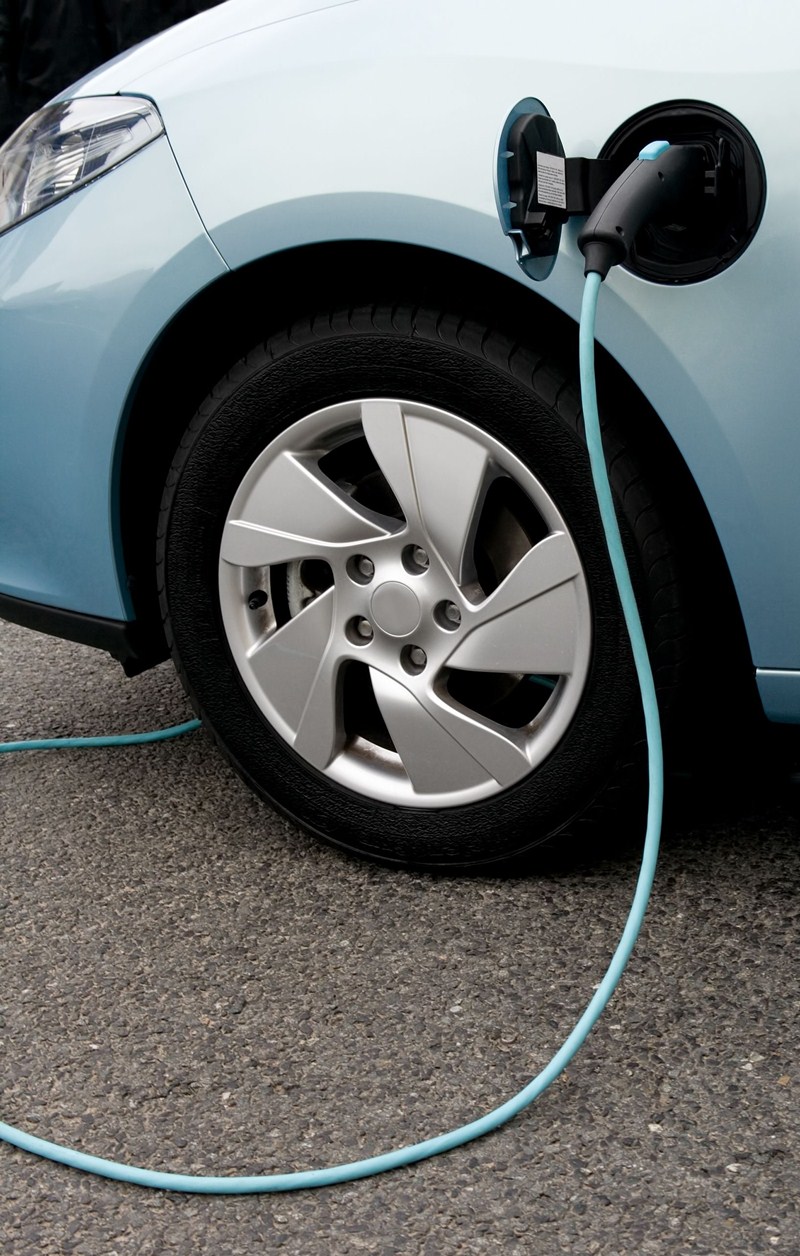
Businesses can claim a 100% first-year allowance (FYA) on the purchase of certain qualifying Plant and Machinery (P&M). The cash-flow benefit of accelerated tax relief is designed to encourage businesses to invest in capital items which help reduce their carbon footprint by being energy and water efficient. The list of qualifying items includes expenditure on new unused electric vehicles and other cars within the 50g/km threshold for low CO2 emissions.

The list also includes:

  • energy saving equipment that’s on the energy technology product list, for example certain motors
  • water saving equipment that’s on the water efficient technologies product list, for example meters, efficient toilets and taps
  • plant and machinery for gas refuelling stations, for example storage tanks, pumps
  • gas, biogas and hydrogen refuelling equipment
  • new zero-emission goods vehicles

The use of the FYA allows companies to set the full cost of qualifying P&M against their tax bills in the year of purchase. The FYA is only available on the purchase of new qualifying cars, second-hand cars do not qualify for FYAs (but writing down allowances can be claimed).

If claiming the full amount of FYA would create a loss, it is also possible to claim less than the full 100% FYA and claim the balance using writing down allowances.

Obviously there are a range of non-tax issues that need to be considered if you are advising clients on these issues, prior to investing in new equipment or vehicles. Hopefully, this post will clarify one raft of tax allowances that you could consider.

This is the archive page

Tax allowances you can claim for business cars

Capital Allowances allow your business to secure tax relief for certain capital expenditure. Qualifying expenditure on cars must usually be allocated to one of two general pools of expenditure. Which pool is appropriate depends on the car’s CO2 emissions.

Expenditure on cars with CO2 emissions over 110g/km will be dealt with in the special rate pool and attract a writing down allowance (WDA) of 6% p.a. This capital allowances rate was reduced in April 2019 from 8%.

Expenditure on cars with CO2 emissions from 50g/km up to and including 110g/km are dealt with in the main pool and attract a WDA of 18% p.a.

Cars that have an element of non-business use, by self-employed drivers, must be allocated to a single asset pool with a rate of either 18% or 6% (depending on the CO2 emissions) to enable the private use adjustment to be made.

First year allowances (FYA’s) are available for expenditure on new electric cars and cars with CO2 emissions up to 50g/km. This expenditure benefits from 100% capital allowances. The FYA’s that related to low CO2 emission cars was due to expire on 31 March 2018 but has now been extended until at least 31 March 2021.

There are different CO2 emission bands for cars bought from April 2015-April 2018, April 2013-April 2015 and April 2009-April 2013.

This is the archive page

Last chance to claim enhanced capital allowances

There is a special scheme known as the enhanced capital allowances (ECA) scheme for energy-saving technologies. The ECA scheme enables a business to claim accelerated tax relief 100% first year allowances (FYA) on qualifying energy efficient and environmentally beneficial technologies.

The accelerated tax relief is designed to encourage businesses to invest in technologies that are energy saving, reduce water use and improve water quality. The ECA schemes are particularly beneficial for those businesses that have fully used their annual investment allowance. The qualifying Energy Technology List (ETL) and Water Technology List (WTL) is applicable for the current 2019-20 tax year.

However, from 1 April 2020 the availability of FYAs and associated first year tax credits available for products on the ETL and WTL will cease. ECA expenditure incurred on qualifying items up to April 2020 will still be eligible for relief.

For most businesses, the majority of the expenditure they incur on plant and machinery will still be eligible for full relief under the Annual Investment Allowance (AIA). However, this change will affect businesses with eligible spend over the AIA limits after April 2020.

This is the archive page

Patents, general considerations

A UK patent is granted under the laws of the UK, usually, by the UK Intellectual Property Office. Obtaining a patent can be a difficult and expensive endeavour. A patent only protects an invention in the country where the patent is registered, and so multiple patents may be required across different jurisdictions.

To be granted a patent, an invention must be all of the following:

  • something that can be made or used
  • new
  • inventive – not just a simple modification to something that already exists

The owner of the patent can take legal action against those who use the patented invention without permission. This falls under the heading of patent rights which are the right to do or authorise the doing of anything that would, but for that right, be an infringement of the patent.

Once a patent is granted, the holder will need to pay renewal fees every year to maintain protection. The amount increases every year the patent is ‘live’. This is to avoid placing too much of a financial burden on the patent holder in the early life of the patent when they are likely to have other costs.

The Patent Box allows companies to apply a lower 10% Corporation Tax rate on profits arising from patent exploitation and which are covered in whole or part by a UK patent.

This is the archive page

What is the Annual Investment Allowance?

The Annual Investment Allowance (AIA) is a generous tax relief that was first introduced in 2008. The AIA allows for the total amount of qualifying expenditure on plant, machinery, commercial vehicles and other qualifying equipment to be deducted from your profits before tax.

The AIA can be claimed by an individual, partnership or company carrying on a trade, profession or vocation, a UK non-residential property business or a furnished holiday let. Only partnerships or trusts with a mixture of individuals and companies in the business structure are unable to qualify for AIA.

The AIA was permanently set at £200,000 for all qualifying expenditure on or after 1 January 2016. However, this limit has been temporarily increased to £1 million for a 2-year period from 1 January 2019 to 31 December 2020. This increased limit is a generous allowance and should cover the annual spend of most small and medium sized businesses. 

The AIA does not apply to purchases of cars.

If you are thinking of incurring large items of capital expenditure for your business over the coming months, you should ensure that any purchase is properly timed to take full advantage of the temporary increase in the AIA limit.

This is the archive page

Its still possible to claim 100% tax allowance for electric vehicles

First Year Allowances (FYA’s) are available for expenditure on new unused electric vehicles and other cars within the threshold for low CO2 emissions. Businesses can claim FYA of 100% in the year they purchase qualifying low emissions or electrically propelled cars. These measures were put in place to help encourage the use of low emission and zero emission vehicles.

The FYA’s for businesses purchasing low emission cars are available until 31 March 2021. The emission threshold below which cars are eligible for the FYA is 50 gms/km. The 50gms/km limit had been higher prior to 1 April 2018 but was reduced as car manufacturers reacted to the growing demand for lower emission and electric cars and developed new clean air technologies.

The FYA allows companies to set the full cost of these qualifying cars against their tax bills in the year the cars were purchased. The FYA is only available on the purchase of new cars, second-hand cars do not qualify for FYAs (but can claim writing down allowances). If claiming the full amount of FYA would create a loss, it is also possible to claim less than the full 100% FYA and claim the balance using writing down allowances.

Planning note

There is no doubt that taking advantage of tax concessions to promote sustainable technologies as the world reacts to the growing awareness of climate change issues will increase in years to come. If you are considering changes to your business car(s) and need to consider the tax advantages for your company and the benefits tax charges levied on employees, please call, we can help.

This is the archive page

Update on Structures and Buildings Allowance

One of the Autumn Budget 2018 measures was the introduction of a new structures and buildings allowance (SBA). The SBA allows for tax relief on qualifying capital expenditure on new non-residential structures and buildings. The relief will therefore apply to the costs of building new commercial structures.

The relief was introduced with effect from 29 October 2018 and applies where all contracts for the physical construction works are entered into on or after that date. The relief is available at an annual rate of 2% on a straight-line basis (over 50 years). No relief will be available where parts of the structure qualify for other allowances, such as Plant & Machinery allowances.

A new policy paper has recently been published by HMRC and provides further details on the workings of this relief. The draft legislation necessary for the introduction of the SBA was laid before the House of Commons on 17 June 2019.

According to HMRC, the SBA will support business investment in constructing new structures and buildings including necessary preparatory costs, and the improvement of existing ones, as well as improving the international competitiveness of the UK’s capital allowances system.