This is the archive page

Steps to modernise UK tax system

At the Autumn Budget 2021, it was announced that there would be a dedicated day this Autumn where the government would set out further plans to continue building a modern, simple and effective tax system. This 'day' was on 30 November 2021, and referred to by HMRC as the aptly named, Tax Administration and Maintenance Day.

A number of documents were published including:

  • An update on reforms to Small Brewers Relief.
  • A technical consultation setting out further detail on the conclusions to the government’s review of business rates.
  • A report on Research and Development (R&D) tax reliefs, providing further details on announcements made at the Budget which included refocusing relief in the UK, targeting abuse, and supporting innovation by expanding qualifying expenditure to capture cloud and data costs. 
  • A Call for Evidence on reforming registration for Income Tax Self-Assessment (ITSA) to give taxpayers a better understanding of their tax obligations and support available to them.
  • Publishing a summary of responses to the Call for Evidence on the Tax Administration Framework Review (TAFR), including plans to reform several areas of the tax administrations system to simplify and modernise it.
  • A Call for Evidence on the role umbrella companies play in the labour market to improve our understanding of the sector.
  • Publishing the first five-year review of the Office of Tax Simplification (OTS) launched in March 2021 to examine the effectiveness of the OTS.
  • A consultation on potential changes to the Stamp Duty Land Tax reliefs for mixed-property and multiple dwellings to ensure they operate fairly and to reduce the scope for misuse.

This is the archive page

New warnings from HMRC re tax fraudsters

Fraudsters are continuing to target taxpayers with scam emails in advance of the 31 January 2022 deadline for submission of Self-Assessment returns. In fact, over the last year, HMRC received nearly 360,000 reports about bogus tax rebate referrals. 

A number of these scams purport to tell taxpayers they are due a rebate / refund of tax from HMRC and ask for bank or credit card details in order to send the fake tax refund. The fraudsters use various means to try and scam people including making contact by phone calls, texts or emails. Fraudsters have also been known to threaten victims with arrest or imprisonment if a bogus tax bill is not paid immediately.

HMRC operates a dedicated Customer Protection team to identify and close down scams but continues to advise taxpayers to identify fraud and avoid becoming victims themselves. For example, HMRC will only contact taxpayers due a refund by post and never use emails, text messages or external companies for this activity. Genuine organisations like HMRC and banks will not contact customers asking for their PIN, password or bank details.

If you think you have received a suspicious call or email claiming to be from HMRC you are asked to forward the details to phishing@hmrc.gov.uk and text to 60599. If you have suffered financial loss, you should contact Action Fraud on 0300 123 2040 or use their online fraud reporting tool.

This is the archive page

If clients ask – trading hours for retailers

There are special rules that govern the trading hours that certain retailers must follow on a Sunday. These rules are defined in the Sunday Trading Act 1994 and apply to shops in England and Wales. The Act restricts the trading hours for retailers with a sales area that exceeds 280 square meters. Small shops in England and Wales are free to open on whatever days and hours they choose. There are no trading hours restrictions in Scotland.

Shops over 280 square metres:

  • Can open on Sundays but only for 6 consecutive hours between 10am and 6pm.
  • Must close on Easter Sunday.
  • Must close on Christmas Day.

Any shop affected by these rules must clearly display their opening hours both inside and outside their shop. There are also certain large shops that are exempt from these rules, including airport and railway station outlets, service station outlets and registered pharmacies.

There are similar rules in Northern Ireland, but large shops can only open between the fixed hours of 1pm and 6pm on a Sunday.

This is the archive page

Vehicles exempt from Vehicle Excise Duty

Vehicle Excise Duty (VED), also commonly referred to as vehicle tax, is an annual tax levied on owners of most cars, vans, motorcycles, and holders of motorcycle trade licences.

There are certain VED exemptions and discounts for people who suffer from various mobility impairments. In addition, alternative fuel vehicles receive a £10 reduction on vehicle tax rates.

The full list of vehicles exempt from vehicle tax are as follows:

  • Vehicles used by a disabled person – an application should be made by eligible users for a disability exemption when they apply for vehicle tax. The exemption is removed if the disabled person no longer uses the vehicle.
  • Disabled passenger vehicles – Vehicles (apart from ambulances) used by organisations providing transport for disabled people are exempt.
  • Mobility scooters and powered wheelchairs – The law calls these ‘invalid carriages’. They must have a maximum speed of 8mph on the road and be fitted with a device limiting them to 4mph on footways, to be exempt.
  • Historic vehicles made before 1 January 1981.
  • Electric vehicles – The electricity must come from an external source, or an electric storage battery not connected to any source of power when the vehicle is moving to be exempt.
  • Mowing machines
  • Steam vehicles
  • Vehicles used for agriculture, horticulture and forestry – This includes tractors, agricultural engines and light agricultural vehicles used off-road. It also includes ‘limited use’ vehicles used for short journeys (not more than 1.5 kilometres) on the public road between land that’s occupied by the same person.
This is the archive page

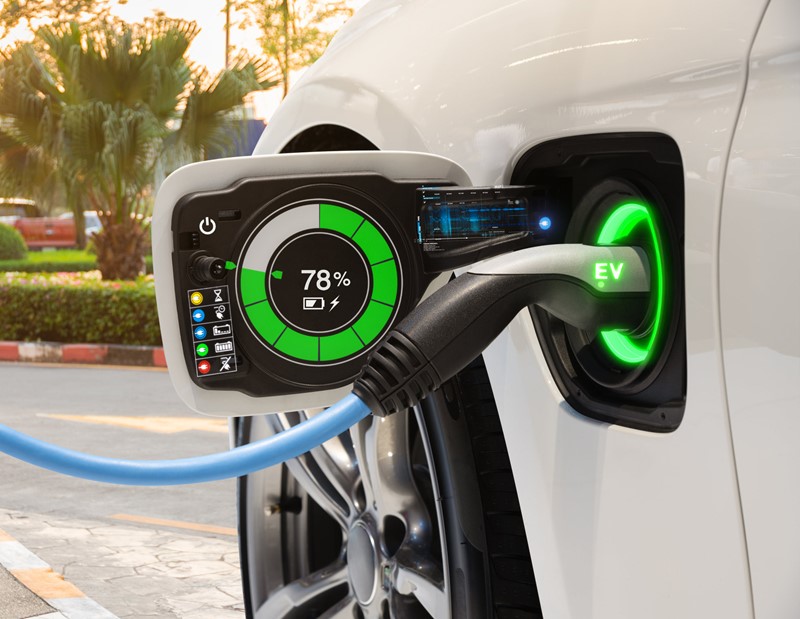
Vehicles eligible for a plug-in grant

The low-emission vehicles plug-in grant can help you save up to £2,500 on the purchase price of new low-emission vehicles. The scheme was first launched in 2011 and is available across the UK with dealers using the grant towards the price of eligible new cars. The paperwork for the grant application is handled by the dealer you purchase your car from. The scheme is open to qualifying purchases by private individuals and businesses.

HMRC publishes a list of qualifying cars and only cars listed are eligible for the grant. There are also grants available for specified motorcycles, mopeds, small vans, large vans, taxis and trucks.

The grant is available for cars with CO2 emissions lower than 50g/km and a 'zero-emission' range of at least 112km. To qualify for the grant, the cars must have an 'on the road' price cap of less than £35,000. This means that many popular environmentally friendly electric cars are not available under the scheme as they sell for more than the price cap.

There are separate criteria for the other vehicle classes. For example, for motorcycles that have no CO2 emissions and can travel at least 50km (31 miles) between charges.

This is the archive page

Transport restrictions eased

The government has announced plans to introduce a temporary extension to road haulage cabotage rules to alleviate pressures with the supply chain due to lorry driver shortages and other global supply issues. The term cabotage in this context refers to specific restrictions on foreign lorry drivers on the amount of work they can do within the UK over a set period.

Under the current rights, the UK allows EU heavy goods vehicle (HGV) drivers to undertake 2 cabotage journeys within 7 days of entry into the UK. The government is proposing allowing unlimited cabotage movements of HGV’s for up to 14 days after arriving on a laden international journey into the UK before returning home. The proposal is that this extension will apply for 3 or 6 months, subject to ongoing review. The proposals are also looking at extending these changes to hauliers from Norway and Switzerland (who do not currently enjoy these rights), as well as to non-EU countries more widely.

The measures are subject to a short consultation but are not expected to come into effect until towards the end of the year as further work will be required to legislate for this change.

Announcing the move, Transport Secretary Grant Shapps said:

‘The temporary changes we’re consulting on to cabotage rules will also make sure foreign hauliers in the UK can use their time effectively and get more goods moving in the supply chain at a time of high demand.’

This is the archive page

Have you claimed your Child Trust Fund cash?

Young persons who turned 18 on or after 1 September 2020 may have cash waiting in a dormant Child Trust Fund (CTF) account. This could be as much as or more than £1,000. The actual amount on deposit depends on certain factors.

Children born after 31 August 2002 and before 3 January 2011 were entitled to a CTF account provided they met the necessary conditions. These funds were invested in long-term saving accounts for newly born children. HMRC has confirmed that there are many thousands of teenagers that have turned 18 and not yet claimed the cash to which they are entitled.

Around 7 million CTF accounts were set up since the scheme was launched in 2002, roughly 6 million by parents or guardians and a further 1 million set up by HMRC where parents or guardians did not open an account.

Around 55,000 accounts mature each month and HMRC has created a simple online tool to help young people find out where their account is held.

Economic Secretary to the Treasury, John Glen, said:

‘It’s fantastic that so many young people have been able to access the money saved for them in Child Trust Funds, but we want to make sure that nobody misses out on the chance to invest in their future.’

If you’re unsure if you have an account or where it may be, it’s easy to track down your provider online.

The actual CTF accounts are not held by HMRC, but by CTF providers who are financial services firms. Anyone can pay into the account, with an annual limit of £9,000, and there’s no tax to pay on the CTF savings interest or profit.

This is the archive page

£500m support for vulnerable households

The government has launched a new £500 million package of support for vulnerable households. The new Household Support Fund will be used to help those most in need with essentials over the coming months as the country continues its recovery from the pandemic.

The fund will be used to help support millions of households in England and monies will be distributed by councils. This means that local councils will also be able to use the funding to provide discretionary support to vulnerable households. This could include using small grants to meet daily needs such as food, clothing, and utilities. Cash will be made available to Local Authorities in October 2021.

The Barnett formula will apply in the usual way to additional funding in England. The devolved administrations will therefore receive up to £79m of the £500m. This will be allocated as follows: £41m for the Scottish Government, £25m for the Welsh Government and £14m for the Northern Ireland Executive.

This fund is in addition to other previously announced measures including the Warm Home Discount which provides a £140 rebate on energy bills each winter to over 2.2 million low-income households and the Cold Weather Payment which provides £25 extra a week for poorer households when the temperature is consistently below zero.

This is the archive page

MTD for Income Tax has been delayed by one year to April 2024

The introduction of Making Tax Digital (MTD) for Income Tax Self-Assessment (ITSA) has been delayed by one year until April 2024. This change was announced in a Written Statement to Parliament. The reason for the delay was given as combination of the issues many UK businesses and their representatives are facing as a result of the pandemic as well as feedback from interested parties.

MTD for ITSA will fundamentally change the way businesses, the self-employed and landlords interact with HMRC. The regime will require businesses and individuals to register, file, pay and update their information using an online tax account. From April 2024, the rules will apply to taxpayers who file Income Tax Self-Assessment tax returns with business or property income over £10,000 annually.

General partnerships will not be required to join MTD for ITSA until a year later, in April 2025. The date other types of partnerships will be required to join will be confirmed in the future. The new system of penalties for the late filing and late payment of tax for ITSA will also be aligned with the new MTD dates.

Some businesses and agents are already keeping digital records and providing updates to HMRC as part of a live pilot to test and develop the MTD for ITSA. The pilot is not affected by the delay and will be extended in 2022-23 in preparation for larger scale testing in 2023-24. Under the pilot, qualifying landlords and sole traders (or their agents) can use software to keep digital records and send Income Tax updates instead of filing a Self-Assessment tax return.

The MTD regime started in April 2019 for VAT purposes only when businesses with a turnover above the VAT threshold were mandated to keep their records digitally and provide their VAT return information to HMRC using MTD compatible software. From April 2022, MTD will be extended to all VAT registered businesses with turnover below the VAT threshold of £85,000.

This is the archive page

OTS releases video update

The Office of Tax Simplification (OTS) was established in July 2010, to provide advice to the Chancellor on simplifying the UK tax system. The OTS has recently published a recording of an online video update setting out its recent publications on three separate issues. 

The insights into tax changes that have been considered by the OTS are as follows:

  1. Capital Gains Tax first and second reports. The first report looks at the policy design and principles underpinning the tax whilst the second report explores key technical and administrative issues. This included recommendations to align the CGT rates with Income Tax rates, changes to Business Asset Disposal Relief, improved CGT guidance and a review of main residence relief.
  2. Making better use of third-party data. The report sets out proposals for making better use of data held by third parties, such as reporting interest on savings and investments from banks directly to HMRC. 
  3. Exploring a change to the UK tax year end date. The OTS has explored changing the 5 April year end date for individuals. The OTS examined what a change would entail, and what benefits it would bring (looking at 31 March and 31 December year end dates). If the government wants to take this further, then additional scoping work and early planning for longer term implementation would be required.