This is the archive page

The don’ts of the new 3-tier system

The new 3-tier system for classifying local COVID alert status sets out what you should not do depending on the classification of your local area. At present they only apply to England. In summary they are:

Local COVID Alert Level – Very High

This is for areas with a very high level of infections. The Government will set a baseline of measures for any area in this local alert level. Consultation with local authorities will determine additional measures. The baseline means the below additional measures are in place:

  • Pubs and bars must close and can only remain open where they operate as if they were a restaurant – which means serving substantial meals, like a main lunchtime or evening meal. They may only serve alcohol as part of such a meal.
  • Wedding receptions are not allowed
  • People must not meet with anybody outside their household or support bubble in any indoor or outdoor setting, whether at home or in a public space. The Rule of Six applies in open public spaces like parks and beaches.
  • People should try to avoid travelling outside the ‘Very High’ area they are in, or entering a ‘Very High’ area, other than for things like work, education, accessing youth services, to meet caring responsibilities or if they are in transit.
  • People should avoid staying overnight in another part of the UK if they are resident in a ‘Very High’ area or avoid staying overnight in a ‘Very High’ area if they are resident elsewhere.

The only area presently classified as Very High is the Liverpool City Region.

Local COVID Alert Level – High

This is for areas with a higher level of infections. This means the following additional measures are in place:

  • People must not meet with anybody outside their household or support bubble in any indoor setting, whether at home or in a public place
  • People must not meet in a group of more than 6 outside, including in a garden or other space.
  • People should aim to reduce the number of journeys they make where possible. If they need to travel, they should walk or cycle where possible, or to plan ahead and avoid busy times and routes on public transport.

The areas presently tagged as High are nominated sections of Cheshire, Greater Manchester, Warrington, Derbyshire, Lancashire, West Yorkshire, South Yorkshire, North East, Tees Valley, West Midlands, Leicester and Nottingham.

Local COVID Alert Level – Medium

This is for areas where national restrictions continue to be in place. This means:

  • All businesses and venues can continue to operate, in a COVID-Secure manner, other than those that remain closed in law, such as nightclubs.
  • Certain businesses selling food or drink on their premises are required to close between 10pm and 5am.
  • Businesses and venues selling food for consumption off the premises can continue to do so after 10pm as long as this is through delivery service, click-and-collect or drive-thru.
  • Schools, universities and places of worship remain open
  • Weddings and funerals can go ahead with restrictions on the number of attendees
  • Organised indoor sport and exercise classes can continue to take place, provided the Rule of Six is followed
  • People must not meet in groups larger than 6, indoors or outdoors

This classification covers the remaining areas of England.

Full details of the area classifications can be accessed on the GOV.UK website. Search for “new local COVID alert levels”.


This is the archive page

100 towns to share £80m

The Communities Secretary, Robert Jenrick, has announced that over 100 towns in England will each be given up to £1 million to kick start regeneration projects and give areas a boost.

The funding to be received varies between £500k and £1m per town. The money will be available to help support projects such as new green spaces, the creation of pop-up businesses spaces, pedestrianising streets to encourage walking or cycling and creating new community hubs to support those living alone.

Projects such as Burton on Trent’s High Street regeneration, for which the town has been awarded £750,000, will see improvements to make the high street a more pleasant place to visit with new bus access and cycle lanes so the public can more easily visit.

In Newcastle-under-Lyme, the £1 million funding will boost the town’s regeneration plans, helping to demolish unloved buildings to make way for a new chapter in the town’s history.

These funds are part of the overall £3.6 billion Towns Fund commitment by government to ensure that spending is decentralised and gives power to local authorities on how they spend money to regenerate their areas. As part of the scheme, each area is receiving support to develop Town Deals – a vision and strategy to improve the local area.

This is the archive page

Venues required to record contact details

It has become a requirement for premises and venues across England to have a system in place to record contact details of their customers, visitors and staff. This move is intended to help trace people should a venue be linked to a coronavirus outbreak. 

The government has said that further guidance and, where necessary, regulations will be published specifying the settings affected by the changes. The scope will cover the hospitality industry, such as pubs, bars, restaurants and cafes, as well as close contact services and other tourism and leisure venues.

These businesses and organisations had been advised to collect and share data, with many effectively doing so. However, the data collection programme has now been formally mandated since 18 September 2020 and will support the NHS Test and Trace service.

The main requirements for collecting contact details are as follows:

•    Details to be stored for 21 days and shared with NHS Test and Trace if required
•    Contact details required include name, contact number, date of visit, arrival, and departure time (if possible)
•    Fixed penalties for organisations that do not comply
•    Venues will also be in breach of the law if they take individual bookings of more than six people
•    Customers who do not provide details may be refused entry.
•    All collected data must comply with GDPR and should not be kept for longer than necessary.

Further details are expected to be published shortly and clarified in future regulations.

This is the archive page

English plastic bag charge to double

The single-use carrier bag charge came into effect in England on 5 October 2015. This introduced a minimum charge of 5p on single-use carrier bags supplied by large shops (with over 250 employees) in England.

Since then single-use carrier bags are no longer given away free when buying goods from large shops. Shoppers who bring their own bags or use thicker, reusable ‘bags for life’ do not need to pay the charge.

The new law has been very effective, reducing the use of single-use carrier bags by over 95% in the main supermarkets and raising over £180m for good causes.

A consultation on extending the remit of the scheme and increasing the minimum charge was launched in December 2018. The government response to the consultation was published recently following delays caused by purdah restrictions and re-prioritisation in light of the COVID-19 pandemic. The government has now confirmed that the charge is to be increased to 10p and extended to include all retailers from April 2021. It is thought that this new charge will apply to almost all plastic bags given out by businesses across England.

The government is also introducing restrictions on the supply of plastic straws, stirrers and plastic-stemmed cotton buds. These additional restrictions will be introduced in October 2020.

This is the archive page

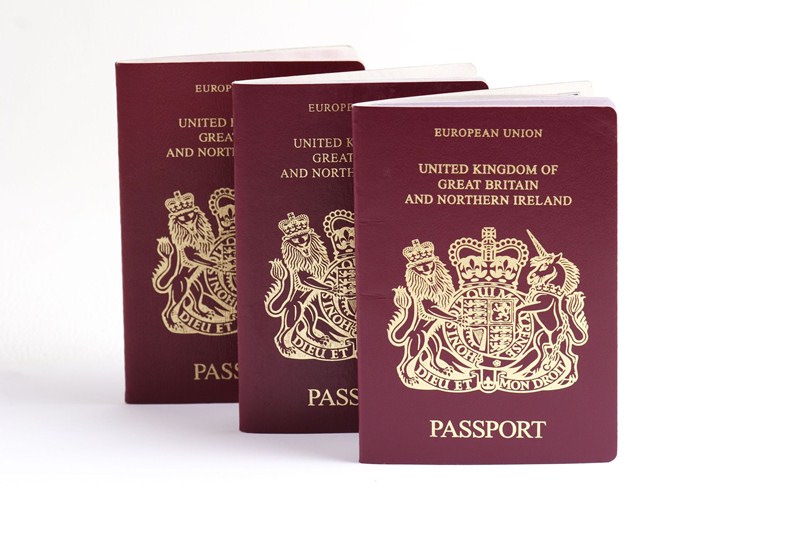
Fast-tracking passport applications

Due to coronavirus disruption, it is currently taking up to six weeks to renew or replace a passport online. It can take even longer if you apply by post or if applying for a first adult passport. Passport offices and the premium and fast track services are currently closed.

However, you may be able to get a passport urgently to travel for compassionate reasons or work, or to prove your identity. For example, if you are applying for a job, mortgage or benefits.

Compassionate reasons to travel include:

  • you or someone you care for needs urgent medical treatment in another country
  • a family member or friend in another country is seriously ill or has died

Valid reasons for urgent travel to another country could apply if, for example, you work:

  • for an airline or haulage company
  • offshore, for example on a rig
  • for government or local government and you’re doing business abroad
  • in healthcare
  • for social services and you need to travel with children
  • for the armed forces or the police
This is the archive page

Government legal department numbers open to fraud

The Government Legal Departments (GLD) is warning that its general enquiry number (020 7210 8500) and switchboard number (020 7210 3000) are being used by fraudsters to try and extract money from members of the public.

In most of the reported cases, the fraudsters claim they are calling from the GLD or HMRC, with the GLD enquiry line number showing in the caller ID. The callers are usually very aggressive on the phone, threatening members of the public that if they do not pay a certain amount of money, the police will arrest them. The calls are NOT being made by GLD or HMRC and are calls being made from numbers that have been effectively hijacked by fraudsters.

The GLD has confirmed that they never make outbound calls from their enquiry line or switchboard number. The GLD will also never ask you for your bank details or to pay money over the phone. If you receive a call of the type described above, please hang up and report full details of the scam by email to: phishing@hmrc.gov.uk. When making your report, please ask for it to be associated with report reference NFRC200803859141. 

If you’ve been a victim of a scam and suffered financial loss, you should call Action Fraud on 0300 123 2040 immediately. Recipients of suspicious emails claiming to be from HMRC should also forward details to phishing@hmrc.gov.uk and suspicious texts to 60599.
 

This is the archive page

Lost your tax reference number?

Your unique taxpayer reference (UTR) is the primary identifier for tax purposes. The number is also sometimes known as your taxpayer number or tax reference number and should be used whenever you contact HMRC or when you file your tax returns. The UTR is a unique 10 digit code. You automatically receive a UTR when you set yourself up to file Self-Assessment tax returns or form a limited company.

If you have mislaid your UTR you should be able to find the number on previous tax returns and other documents from HMRC, such as notices to file a return and payment reminders. You can also find your UTR in your HMRC online account.

If you are unable to locate your UTR you can call the Self-Assessment helpline to request your UTR on 0300 200 3310. The lines are usually open from Monday to Friday: 8am to 8pm, Saturday: 8am to 4pm and Sunday: 9am to 5pm. However, the hours are currently shortened due to impact of coronavirus and the lines are open Monday to Friday only from 8am to 4pm.

If you have mislaid your Corporation Tax UTR this can be requested online and HMRC will send a copy of the number by post to the company’s registered address as shown on Companies House.


This is the archive page

New payments for people self-isolating

The government has announced the launch of a new trial scheme that will pay people on low incomes who need to self-isolate and are unable to work from home. The trial will start in Blackburn, Darwen, Pendle, and Oldham to ensure the process works. The trial scheme started on Tuesday, 1 September 2020. The scheme is then expected to be rolled out in other areas of England with high coronavirus infection rates.

The new scheme will only be made available to people currently receiving either Universal Credit or Working Tax Credit. The benefits payment will allow for payments of up to £182 to be made to people who have tested positive for COVID-19 and their contacts.

Individuals who test positive with the virus will receive £130 for their 10-day period of self-isolation. Other members of their household, who have to self-isolate for 14 days, will be entitled to a payment of £182.

Non-household contacts advised to self-isolate through NHS Test and Trace will also be entitled to a payment of up to £182, tailored to the individual length of their isolation period. Any payments made under the scheme will not reduce any other benefits for the recipient.

The scheme will help support people on low incomes who are unable to work from home while self-isolating, either after testing positive, or after being identified by NHS Test and Trace as living in the same household as – or coming into contact with – someone who has tested positive.

This is the archive page

Teenagers to get access to Child Trust Funds

Children born after 31 August 2002 and before 3 January 2011 were entitled to a Child Trust Fund (CTF) account provided they met the necessary conditions. These funds were long-term saving accounts for newly born children. The first of these children will begin turning 18 from 1 September 2020.

HMRC has confirmed that millions of teenagers are set to benefit as their accounts mature. Approximately 6.3 million CTF accounts have been set up since the scheme was launched in 2002, roughly 4.5 million by parents or guardians and a further 1.8 million set up by HMRC where parents or guardians did not open an account.

From September, an estimated 55,000 accounts will mature each month and HMRC has created a simple online tool to help young people find out where their account is held.

Economic Secretary to the Treasury, John Glen, said:

We want to make sure all young people can access the money which has been set aside for them, to invest in their future and continue a savings habit, as they turn 18.’

If you’re unsure if you have an account or where it may be, it’s easy to track down your provider online.

The actual CTF accounts are not held by HMRC, but by a number of CTF providers who are financial services firms. Anyone can pay into the account, with an annual limit of £9,000, and there’s no tax to pay on the CTF savings interest or profit.

This is the archive page

Eviction ban extended by 4 weeks

The government has announced a further four-week extension to the eviction ban for tenants affected by the Coronavirus pandemic. This means that landlords in England and Wales will be banned from evicting tenants until at least 20 September 2020. This takes the total ban to 6 months.

The government has also announced plans to give tenants greater protection from eviction over the winter by requiring landlords to provide tenants with a new 6 months’ notice period (extended from 3 months’) in all bar those cases raising other serious issues such as those involving anti-social behaviour and domestic abuse perpetrators, until at least 31 March 2021. The Scottish government has also introduced a ban on evictions until March 2021 and there is currently an extended 12-week notice period in Northern Ireland.

The government has said it will keep these measures under review with decisions guided by the latest public health advice.

When courts do resume eviction hearings they will carefully prioritise the most egregious cases, ensuring landlords are able to progress the most serious cases, such as those involving anti-social behaviour and other crimes, as well as cases where landlords have not received rent for over a year and would otherwise face unmanageable debts.

According to independent research, 87% of tenants have continued to pay full rent since the start of the pandemic, with a further 8% agreeing reduced fees with their landlords. However, landlords and tenants continue to face situations where tenants are unable to pay their bills resulting in lost rental income.