This is the archive page

Upcoming bank holiday dates

We thought it would be useful to remind our readers of the upcoming bank holiday dates across England, Wales, Scotland and Northern Ireland. Whilst many people are still under lockdown, there are still some extra days off to look forward to for the rest of the year.

2020 bank holidays in England and Wales

Monday 25 May – Spring bank holiday
Monday 31 August – Summer bank holiday
Friday 25 December – Christmas Day
Monday 28 December – Boxing Day (substitute day)

2020 bank holidays in Scotland

Monday 25 May – Spring bank holiday
Monday 3 August – Summer bank holiday
Monday 30 November – St Andrew’s Day
Friday 25 December – Christmas Day
Monday 28 December – Boxing Day (substitute day)

2020 bank holidays in Northern Ireland

Monday 25 May – Spring bank holiday
Monday 13 July – Battle of the Boyne (Orangemen’s Day) (substitute day)
Monday 31 August – Summer bank holiday
Friday 25 December – Christmas Day
Monday 28 December – Boxing Day (substitute day)

If a bank holiday is on a weekend, a 'substitute' weekday becomes a bank holiday, normally the following Monday.

This is the archive page

Extension of vehicle MOT dates

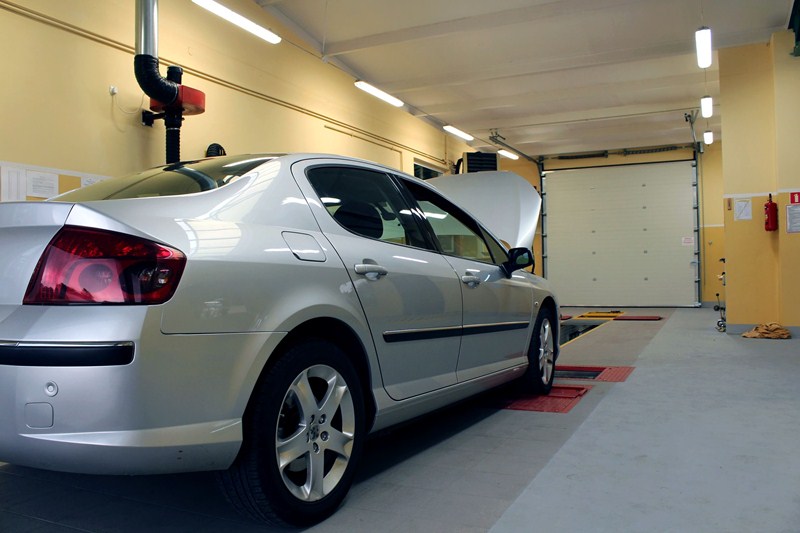
A reminder that MOT expiry dates are being extended by 6 months for all MOTs due on or after 30 March 2020. This includes vehicles that are due their first ever MOT test and applies to cars, motorcycles, light vans and other light vehicles.

The MOT expiry date will be automatically extended approximately 7 days before it’s due to expire. Your vehicle tax remains due as normal. You cannot renew your vehicle tax until your MOT expiry date has been extended. This means you might need to wait until later in the month to tax your vehicle after your MOT has been extended.

It is very important to remember that vehicles must be kept roadworthy even if an MOT date has been extended. Unsafe vehicles should be taken to an open garage for repair. There are different rules for those with MOT expiry dates on or before 29 March 2020 as the law only changed on 30 March 2020.

The Department for Transport is working with insurers and the police to make sure people are not unfairly penalised for not being able to organise an MOT. If you are not using your car, you can also register your vehicle as off the road by obtaining a statutory off-road notification (SORN). This will see any remaining full months of tax refunded and you could also look into cancelling your car insurance (with a SORN).

This is the archive page

Businesses that must presently stay closed

Government guidance on businesses in England that must presently stay closed has been updated. The government is clear that failure to follow the law relating to these closures can lead to the individual responsible for the business being issued a prohibition notice, a fixed penalty notice or prosecution.

The current pandemic has seen most non-essential businesses closed in an unprecedented high street shutdown that started on 24 March 2020. Only a limited number of retailers that sell what have been deemed to be essential goods have been allowed to stay open. Garden centres and plant nurseries were allowed to reopen on 13 May 2020 as part of a number of measures to slowly ease the lockdown.

The government has also allowed takeaway and delivery services to remain open if they are able to safely operate in line with specific guidance. Online retail and click and collect services have also been allowed to continue to operate if social distancing guidance is followed.

The guidance for businesses in Scotland, Wales and Northern Ireland are set by the devolved administrations.

This is the archive page

HMRC’s tax app

A free HMRC tax app is available and offers some useful functionality. The app has recently been updated.

The APP can be used to see:

  • your tax code and National Insurance number
  • an estimate of the tax you need to pay
  • your income and benefits
  • how much you will receive in tax credits and when they will be paid
  • your Unique Taxpayer Reference (UTR) for Self-Assessment

The app can also be used to complete a number of tasks that usually require the user to be logged on to a computer. This includes:

  • renew and report changes to your tax credits
  • access your Help to Save account
  • using HMRC’s tax calculator to work out your take home pay after Income Tax and National Insurance deductions
  • track forms and letters you have sent to HMRC
  • claim a refund if you have paid too much tax
  • update your postal address

The app is available to download from the App Store for iOS and from the Google Play Store for Android.

This is the archive page

Agent update April 2020

HMRC has released the latest bi-monthly issue of the 'Agent Update' publication which includes summaries of recent changes and updates that have been announced. The document, which is aimed at taxation and accountancy practitioners, includes links to more detailed information on each of the topics covered.

The topics covered in the latest edition include the following:

  • COVID-19. A reminder that the government portal listing all the various financial support measures for businesses during coronavirus is available at https://www.gov.uk/government/collections/financial-support-for-businesses-during-coronavirus-covid-19.
  • Off-payroll working rules. Confirmation that the government have postponed the roll-out of off-payroll working rules to the private sector until 6 April 2021. This deferral was announced in response to COVID-19, to help businesses and individuals deal with the economic impacts of the pandemic and the government remains committed to introducing this policy.
  • Independent Loan Charge Review. A number of important changes have been made to the loan charge following the independent loan charge review. This will result in some people being due a refund of voluntary restitution. HMRC will not be able to process any refunds until the Finance Bill has received Royal Assent, expected in summer 2020 although subject to delay due to the impact of COVID-19.
  • Construction Industry Scheme. A reminder of filing dates and an update on tax refunds following the end of the tax year. Repayments can be requested online, but refunds cannot be processed until 24 April and it can take 40 working days for repayments to be made.
  • Official Rate of Interest for the 2020-21 tax year. From 6 April 2020, the official rate of interest was reduced to 2.25% (from 2.5%). This interest rate is used to calculate the Income Tax charge on the benefit of employment related loans and the taxable benefit of some employer-provided living accommodation.
  • Links to new Revenue & Customs Briefs.
This is the archive page

£750m support for charities

The Chancellor, Rishi Sunak, has announced an additional £750m of funding for front-line charities to help them to continue their vital work during the COVID-19 pandemic.

The £750m is made up of a direct allocation of £360 million from government departments to charities providing key services during the crisis, including hospices and those charities supporting the victims of domestic abuse. A further £370 million will support small and medium-sized charities – including through a grant to the National Lottery Community Fund. These grants will support organisations working in local communities, including those delivering food, essential medicines and providing financial advice during the outbreak.

A further minimum of £20m will be allocated from the government to the National Emergencies Trust Appeal – a funding raising programme that will be aired on the BBC on 23 April. The government has committed to match public donations made on the night. 

Taken together, we are told that tens of thousands of charities providing vital services will benefit from direct cash grants to ensure they can meet increased demand as a result of the virus as well as continuing their day-to-day activities supporting those in need.

Whilst charities welcomed this news there are still significant concerns that many will face collapse whilst facing higher demand for their services and a huge decrease in fundraising opportunities due to cancelled events and closure of charity shops.

This is the archive page

MOT expiry dates and vehicle tax

The Driver and Vehicle Licensing Agency (DVLA) has confirmed that MOT expiry dates will be extended by 6 months for all MOTs due on or after 30 March 2020. This includes vehicles that are due their first MOT test and applies to cars, motorcycles, light vans and other light vehicles.

The MOT expiry date will be automatically extended just before it is due to expire. Your vehicle tax remains due as normal. You cannot renew your vehicle tax until your MOT expiry date has been extended. This means you might need to wait until later in the month to tax your vehicle after your MOT has been extended.

It is important that vehicles must be kept roadworthy even if a MOT date has been extended. Unsafe vehicles should be taken to an open garage for repair. There are different rules for those with MOT expiry dates on or before 29 March 2020 as the law only changed on 30 March. If you are affected, a MOT must be booked as usual unless you are self-isolating or extremely vulnerable from Coronavirus (shielding).

The Department for Transport is working with insurers and the police to make sure people are not unfairly penalised for not being able to get a MOT. If you are not using your car, you can also register your vehicle as off the road by obtaining a statutory off road notification (SORN). This will allow you to obtain a refund of any remaining full months of road fund tax previously paid.

This is the archive page

Coronavirus tax payment helpline

The phone number for the COVID-19 helpline launched earlier this month has been changed to 0800 024 1222. Calls to the previously published number will be redirected. The launch of the new number will help increase capacity. 

The helpline will field questions and concerns from any business or self-employed individual worried about paying their tax due to Coronavirus disruption and to receive practical help and advice. HMRC has said that there are up to 2,000 experienced call handlers available to support businesses and individuals when needed.

For those who are unable to pay due to Coronavirus, HMRC will discuss your specific circumstances to explore:

  • agreeing an instalment arrangement
  • suspending debt collection proceedings
  • cancelling penalties and interest where you have administrative difficulties contacting or paying HMRC immediately

The helpline opening hours are Monday to Friday 8am to 4pm. The helpline will not be available on Bank Holidays. HMRC say that these reduced opening hours are due to fewer staff being available due to the Coronavirus and to be prepared for a long wait. 
 

This is the archive page

Relaxation of phone contracts during COVID-19 outbreak

An interesting joint statement from the Government, Ofcom and the telecommunications industry has been published to help offer support to vulnerable consumers and those who may become vulnerable due to circumstances arising from COVID-19.

The UK’s major internet service and mobile providers, namely BT/EE, Openreach, Virgin Media, Sky, TalkTalk, O2, Vodafone, Three, Hyperoptic, Gigaclear, and KCOM have all agreed the following commitments, effective immediately (from 29 March 2020):

  • All providers have committed to working with customers who find it difficult to pay their bill as a result of COVID-19 to ensure that they are treated fairly and appropriately supported.
  • All providers will remove all data allowance caps on all current fixed broadband services.
  • All providers have agreed to offer some new, generous mobile and landline packages to ensure people are connected and the most vulnerable continue to be supported. For example, some of these packages include data boosts at low prices and free calls from their landline or mobile.
  • All providers will ensure that vulnerable customers or those self-isolating receive alternative methods of communication wherever possible if priority repairs to fixed broadband and landlines cannot be carried out.

Digital Secretary Oliver Dowden said:

It’s fantastic to see mobile and broadband providers pulling together to do their bit for the national effort by helping customers, particularly the most vulnerable, who may be struggling with bills at this difficult time.

There have also been other specific measures announced by UK operators to support their customers through this pandemic such as offering additional TV channels free of charge.

This is the archive page

Contactless payment limit increased

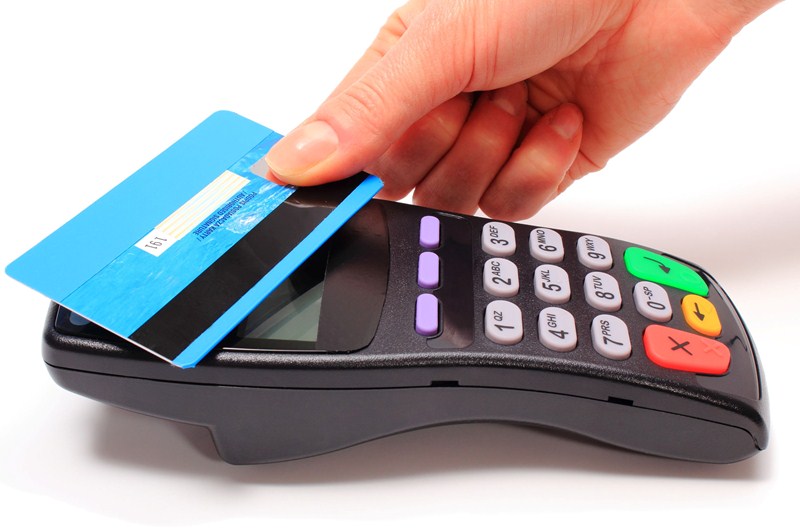
The spending limit for contactless card payments has been increased from £30 to £45 effective 1 April 2020. The change in the limit had been under consideration and has now been expedited as part of the industry’s response to the Covid-19 outbreak. 

The change will allow more contactless payments to be made reducing the need to enter pin numbers and handling of cash. Mobile payments such as Apple Pay and Google Pay, do not have an upper limit once they've been authenticated using biometric technologies such as a fingerprint or face scan.

The updated limit will take some time to be introduced at all retailers as many retailers are facing staff shortages and other pressures as a result of COVID-19. 

UK Finance, which represents the finance and payments industry, said the decision was made following talks with the retail sector. There have also been similar increases made in several other European countries.