This is the archive page

New £20 note launched

The new £20 note entered into circulation on 20 February 2020 and features the image of the artist JMW Turner. It will take a few weeks for the notes to become commonplace across the country. The new £20 note includes a number of new security features including two windows and a two-colour foil, making it very difficult to counterfeit.

The new £20 note joins the current £5 and £10 notes in being printed on polymer, a thin flexible plastic. It has already been confirmed that a new £50 note will be issued in 2021 featuring Alan Turing, completing the updating of all current Bank of England banknotes.

In tandem with the launch of the new £20 note the process of withdrawing the current paper £20 notes from circulation will begin. The paper £20 notes will remain as legal tender until they are withdrawn. The exact date that the paper notes are to be withdrawn has not yet been announced. The Bank of England has confirmed it will give six months’ notice ahead of the paper notes being withdrawn as legal tender. Even after the old £20 notes have been withdrawn, many banks will still continue to accept them as deposits from customers.

This is the archive page

Budget date re-confirmed

After a tumultuous few days in politics, it has been confirmed by the new Chancellor of the Exchequer, Rishi Sunak that the Budget will take place as planned on Wednesday 11 March 2020.

There has been fevered press speculation that the new Chancellor might delay the Budget date to give him more time to prepare. Rishi Sunak was previously the chief secretary to the Treasury and has had a meteoric rise to the top echelons of government becoming Chancellor at the relatively tender age of 39.

The previous Chancellor, Sajid Javid, resigned on February 13 after resisting calls from the Prime Minister to sack all of his special advisers. Mr Javid will be partly remembered for being one of the UK’s few chancellors never to have presented a Budget to the House of Commons.

On Tuesday of this week, the new Chancellor posted a photo of himself preparing for the Budget and confirmed that he was 'cracking on with preparations for my first Budget on March 11. It will deliver on the promises we made to the British people – levelling up and unleashing the country’s potential'. This announcement was later followed by confirmation from HM Treasury that the Budget will go ahead as planned.

This will be the first Budget following the UK’s departure from the EU and we may see many new measures being announced. Details will be posted on this news-feed after the budget.

This is the archive page

Breathing space to help those in debt

HM Treasury has confirmed that the new 'breathing space' scheme to help those with problem debts will become operational next year. The scheme will provide legal protections from creditor action while those affected will receive professional debt advice in order to find an appropriate solution to their debt issues.

The breathing space scheme will have a 60-day respite period during which individuals will be protected from almost all enforcement action by creditors whilst working with a debt advice agency. The scheme will apply to almost all personal debts such as credit cards and loans as well a wide range of debts owed to the Government. The use of the scheme will help prevent debts from continuing to spiral by stopping the accrual of contractual interest, default interest, fees and charges during the breathing space period.

The same measures will apply to certain vulnerable individuals working with Approved Mental Health Professionals. Creditors will also benefit from the introduction of the scheme with over £400 million in extra repayments expected in the first year, as individuals get the support they need to get their payments back on track. The Government has estimated that up to 700,000 people across the UK will use the scheme during its first year in operation.

This is the archive page

Farm payments during the transition period

The Chancellor recently announced that the level of funding for direct payments for farmers would continue for 2020 at the same rate as 2019. This has now been confirmed by the Department for Environment, Food & Rural Affairs (DEFRA).

This will help provide certainty to farmers allowing them to plan for the future, sow their crops and care for their livestock with confidence. The direct payments scheme forms the majority of spending under the CAP and provides subsidies to farmers based on the area of land under management.

The UK Government will also continue to fund existing Rural Development Programme (RDPE) projects and those approved by 31 December 2020 until those projects end.

Farming support schemes will continue to be run by:

  • the Rural Payments Agency (RPA) in England
  • DAERA in Northern Ireland
  • the Welsh Government in Wales
  • the Scottish Government in Scotland

It has also been confirmed that the current framework of rules and processes will stay the same, until DEFRA and the devolved administrations introduce new agriculture policies and schemes.

This is the archive page

Travel to EU during transition period

For the time being, travel between the EU and UK continues as before. This means that if you have any travel plans to the EU during the rest of 2020 you can expect the pre-Brexit withdrawal travel regulations will still apply.

However, new rules are likely to apply for travel to Europe from 1 January 2021. This is conditional on the transition period ending on 31 December 2020. 

This means that from 1 January 2021, if you hold a British passport you will need to ensure that your passport is valid for at least six months on the day you travel and be less than 10 years old (even if validity is more than 6 months). These rules apply when travelling to all members states of the EU (not including Ireland) as well as to other European countries including Switzerland, Norway, Iceland and Liechtenstein.

If you renewed your current passport before the previous one expired, extra months may have been added to its expiry date. Any extra months on your passport over 10 years may not count towards the 6 months needed.

If you are booking a holiday in Europe after 1 January 2021, you will need to keep abreast of any changes agreed. We will of course keep you posted.

This is the archive page

Points to consider during transition period

Now that the formal Brexit withdrawal agreement is agreed, there will be changes to the rules for living, working, travelling and doing business in the UK and EU. These changes are expected to commence at the end of the transition period, from 1 January 2021.

While in the transition, the current rules on trade, travel, and business for the UK and EU will continue to apply.

Much is likely to change from 1 January 2021. This will include rules in relation to healthcare, driving, pet travel and mobile data roaming. For example, the European Health Insurance Card (EHIC) will be valid up to 31 December 2020, but its future remains uncertain after 1 January 2021.

Anyone driving in Europe may also need an international driving permit (IDP) to drive in some countries as well as an insurance 'green card' and a GB sticker.

The existing pet passport scheme will change from 1 January 2021 as will the guarantee of free mobile phone roaming throughout the EU, Iceland, Liechtenstein and Norway.

This is the archive page

Brexit coin issued

The Government has announced that a new 50 pence coin entered into circulation on 31 January to mark the UK’s departure from the European Union. The new coin, which was unveiled by the Chancellor, Sajid Javid, who is also the Master of the Mint bears the inscription "peace, prosperity and friendship with all nations" as well as the Brexit date of 31 January 2020.

Commenting after seeing the coin for the first time, the Chancellor of the Exchequer, Sajid Javid said:

'Leaving the European Union is a turning point in our history and this coin marks the beginning of this new chapter.'

The Government has confirmed that about 3 million of the coins will be distributed from banks, post offices and shops from Brexit day with another 7 million entering circulation later in the year.

The launch of the coin underlines the long running Brexit saga as this is the third time that the launch of a special Brexit coin has been announced. The first launch of the coin was planned for the original Brexit date of 31 March 2019 and the second launch for the delayed 31 October 2019 Brexit date when an estimated 1 million coins had to be melted down. 

This is the archive page

Don’t be taken in by this scam

The Insolvency Service has warned that fraudsters have been contacting investors in insolvent schemes claiming to be from the Official Receiver’s office or to have been appointed by the Official Receiver to help recover funds for a fee. These contacts are fraudulent.

The Insolvency Service provides services to those affected by financial distress or failure. Insolvency occurs when individuals or businesses do not have enough assets to cover their debts or are unable to pay their debts when they become due. It is important to note that Official Receivers or any agent legitimately instructed to act on their behalf will never ask you to pay a fee to get some or all of your investment back.

The Official Receiver can only make a return to you as a creditor in failed schemes if it is possible to identify and sell any remaining assets owned by the liquidated company you bought your investment from. Often a repayment, if any is due, can take several years to organise.

Paying a fee will not make you a priority creditor and will not result in you being paid faster nor increase your chances of getting any money back. Please don’t be taken in by this type of scam.

This is the archive page

Scottish 2020 Budget

Derek Mackay, Scotland’s finance secretary has announced that the Scottish Government’s Budget will be published for 2020-21 on 6 February 2020. The date has been selected in order to allow the Scottish Government time to prepare for the new tax year.

This is the first time that Scotland has held a Budget before the rest of the UK. The delay in the UK Budget until 11 March had left the Scottish Government in a quandary and with no time to wait until after the UK Budget to deliver their Budget and have it approved before the start of the next tax year.

In fact, Mr Mackay unequivocally said:

'The UK Government’s approach to the Scottish Budget has been completely unacceptable and has shown a disregard for devolution and a lack of fiscal responsibility.

The timing of the UK Budget made it impossible for us to publish our own budget after the UK Government’s without drastically restricting the time for parliamentary scrutiny.

In these exceptional circumstances, created by the UK Government, it is vital we give local authorities and public services clarity on their budgets. That is why we have made the decision to publish our budget in February which will allow local authorities to set their budgets and council tax before the legal deadline of 11 March.'

The Scottish Parliament sets the Income Tax rates and bands for non-savings and non-dividend income in Scotland. Scottish taxpayers therefore, pay Income Tax at separate rates and bands to the rest of the UK on their non-savings and non-dividend income.

This is the archive page

New taskforce to target waste criminals

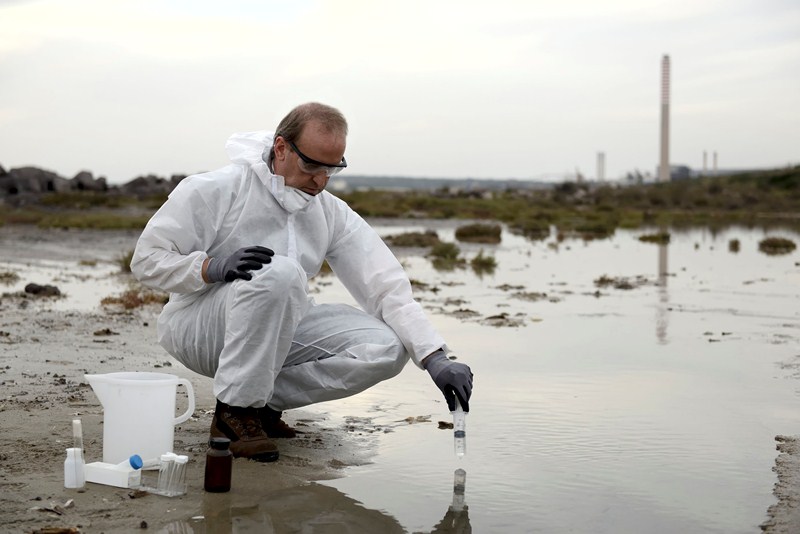
A new taskforce has been launched to tackle serious and organised waste crime, such as dumping hazardous materials on private land and falsely labelling waste so it can be exported abroad to unsuspecting countries.

This will be the first time that law enforcement agencies, environmental regulators, HMRC and the National Crime Agency have worked together to help stamp out waste crime as part of the work of the new Joint Unit for Waste Crime (JUWC).

Serious and organised waste crime is estimated to cost the UK economy at least £600 million a year. The new unit will share their intelligence and resources to take swifter action when investigating criminal waste operations and other connected illegal activities, such as money laundering and human trafficking.

Actions taken will include conducting site inspections, making arrests and prosecutions, pushing for heavy fines and custodial sentences.

Toby Willison, Chair of the JUWC Board, said:

'The war against waste crime just took a giant step forward. The launch of this new unit means we now have a full complement of partners across law enforcement as well as our counterparts in Scotland and Wales to bring down waste criminals for good. We will target serious and organised criminals across the country as they try to illegally exploit the waste industry and the environment. These criminal gangs need to know that we have them in our sights.'