This is the archive page

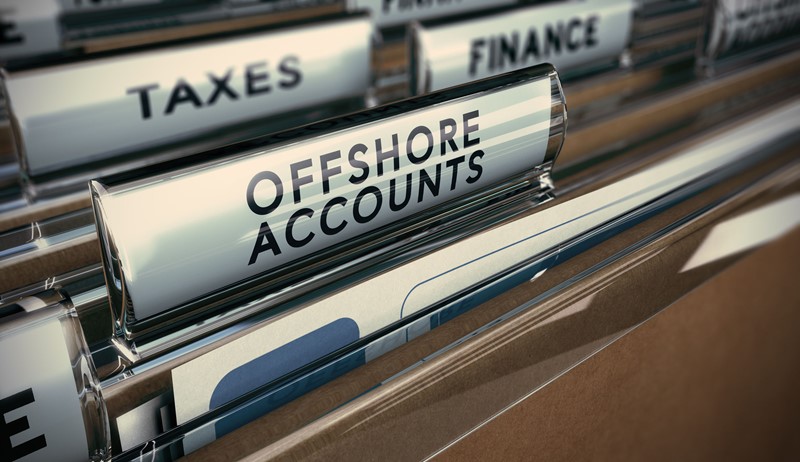
HMRC launch offshore property owners campaign

It has been reported by the Chartered Institute of Taxation (CIOT) that HMRC is to launch a new campaign to tackle non-compliance linked to offshore corporates owning UK property. HMRC has conducted a review of non-resident corporate owners of UK property using data from the Land Registry and other sources. This review has helped HMRC identify offshore property owners that may not have fully met their UK tax obligations. 

HMRC is now expected to write to those identified, encouraging them to review their UK tax position and if necessary to make a disclosure to HMRC if any issues are identified. There are two different letters that may be sent. The first, titled ‘Disclosure for Annual Tax on Enveloped Dwellings/Non-Resident Landlord liabilities’ and the second titled ‘Disposal of interest in UK residential property’. Both letters also recommend that the companies should ask connected UK-resident individuals to ensure their personal tax affairs are up to date in respect of the related anti-avoidance provisions. 

There are higher penalties for offshore tax non-compliance. In certain circumstances, these penalties may be reduced. The largest reductions are for unprompted disclosures. The penalty also varies depending on whether the errors are careless, non-deliberate, deliberate or deliberate and concealed.

It should also be noted that a new Register of Overseas Entities was recently launched by Companies House. This register requires overseas entities that own land or property in the UK to declare their beneficial owners and / or managing officers. Overseas entities that already own UK property are required to register with Companies House and provide details of their registrable beneficial owners and / or managing officers by 31 January 2023. This applies to overseas entities who bought property or land on or after 1 January 1999 in England and Wales, 8 December 2014 in Scotland and on or after 1 August 2022 in Northern Ireland. 

This is the archive page

Donations to overseas charities

Taxpayers who make donations to charities in other countries can qualify for tax relief in the UK under certain circumstances. This means that UK charitable tax reliefs are available to certain organisations which are the equivalent of UK charities and Community Amateur Sports Clubs (CASCs) in the EU, Norway, Iceland and Liechtenstein (referred to as the EEA) provided they meet the UK tax definition of a charity. The charity would also need to be recognised by HMRC in order for taxpayers to claim relief.

The treatment of donations to charities outside the EEA area is different and in most cases the donations do not qualify for tax relief as the charities are not recognised entities for charitable purposes. For this reason, many large foreign charities that attract donations from the UK may decide to register with the Charity Commission in England and Wales. There are different rules in Scotland and Northern Ireland. This is quite a complex area and there are many requirements that must be met in order to register as a charity.

If the charity meets the UK definition of a charity, then UK higher rate or additional rate taxpayers, will be entitled to claim relief on the difference between the basic rate and their highest rate of tax made on an eligible donation.

For example:

If a taxpayer donated £5,000 to charity, the total value of the donation to the charity is £6,250. They can claim back additional tax back of:

  • £1,250 if they pay tax at the higher rate of 40% (£6,250 × 20%),
  • £1,562.50 if they pay tax at the additional rate of 45% (£6,250 × 20%) plus (£6,250 × 5%).

Higher rate or additional rate taxpayers have the option to carry back charitable donations to the previous tax year. A request to carry back the donation must be made before or at the same time as the previous year’s Self-Assessment return is completed.

This is the archive page

Reminder of eight-step export routine

Following the end of the Brexit transition period, the process for exporting goods to the EU mirrors the process for all other international destinations.

Businesses, especially those that only trade with EU should by now be aware of the rules and be working accordingly. Businesses can make customs declarations themselves or hire a third party such as a courier, freight forwarder or customs agent to do the paperwork.

HMRC lists the following eight-steps that should be considered when exporting goods:

  1. Check if you need to follow this process. The process listed below should be if you're moving goods permanently from: England, Wales or Scotland (Great Britain) to a country outside the UK or from Northern Ireland to a country outside the UK and the EU. There are different rules for goods that move between Great Britain and Northern Ireland or between Northern Ireland and the EU.
  2. Check the rules for exporting your goods.
  3. Get your business ready to export. This includes ensuring you have an Economic Operator Registration and Identification (EORI) number.
  4. Decide who will make export declarations and transport the goods
  5. Classify your goods.
  6. Prepare the invoice and other documentation for your goods.
  7. Get your goods through customs.
  8. Keep invoices and records.
This is the archive page

Financial support for exporters

There is a special financial support targeted specifically at exporters.  This is in addition to the package of government-backed and guaranteed loans and other measures designed to support businesses coping with the financial effects of Coronavirus (COVID-19).

UK Export Finance (UKEF) is the export credit agency and a ministerial department of the UK government. The UKEF helps UK companies by providing insurance to exporters and guarantees to banks to share the risks of providing export finance. In addition, it can make loans to overseas buyers of goods and services from the UK that can protect UK exporters facing delayed payments or transit restrictions.

At this crucial time, the following help may be available from UKEF:

  • If your business is facing disruption due to late payments, UKEF can help ease cash flow constraints by guaranteeing bank loans through its Export Working Capital Scheme
  • If you are concerned about getting paid, UKEF offers an export insurance policy that can help you recover the costs of fulfilling an order that is terminated by events outside your control
  • UKEF can also support finance for overseas buyers through the Direct Lending Facility scheme, so they can continue to buy your goods and services
  • UKEF has over £4 billion of capacity to support UK firms exporting to China, as well as significant capacity across other markets affected by Coronavirus (COVID-19) to help cover these risks.