Declare COVID support payments received

HMRC is reminding Self-Assessment taxpayers that they must declare COVID-19 grant and support payments in their tax return for the 2021-22 tax year.

Most COVID support scheme grants are treated as taxable income in the same way as other taxable receipts and need to be reported to HMRC. This means that if you received a taxable support payment during the 2021-22 this needs to be reported on your tax return. This applies to self-employed, partnerships and businesses.

Many of the grants fell into the previous tax year but more than 2.9 million people claimed at least one Self-Employment Income Support Scheme (SEISS) payment in the 2021-22. These grants are taxable and should be declared on tax returns for the 2021-22 tax year before the deadline on 31 January 2023.

The SEISS application and payment windows during the 2021-22 tax year were:

  • SEISS 4: 22 April 2021 to 1 June 2021
  • SEISS 5: 29 July 2021 to 30 September 2021

HMRC’s guidance is clear that whether or not any tax is paid will depend on the business profits of the grant recipient (taking into account the grant and other business income and expenditure under normal tax rules), any other taxable income they may have and their personal and any other allowances to which they are entitled.

HMRC also has the power to recover payments and charge penalties where claimants have made support grant claims to which they were not entitled. There is no requirement to report COVID welfare payments made by a council such as those that were made to help with council tax payments and housing benefit.

HMRC may be able to help those who are unable to pay their tax bill in full by arranging an affordable payment plan, known as a Time to Pay arrangement. Most taxpayers can apply online to make this arrangement.

VAT – partly exempt businesses

A business that incurs expenditure on taxable and exempt business activities is partially exempt for VAT purposes.

This means that the business is required to make an apportionment between the activities using a 'partial exemption method' in order to calculate how much input tax is recoverable.

Businesses that make both taxable and exempt supplies must keep a separate record of exempt supplies along with details of how much VAT has been reclaimed.

There are a number of partial exemption methods available. The standard method of recovering any remaining input tax is to apply the ratio of the value of taxable supplies to total supplies, subject to the exclusion of certain items which could prove distortive. The standard method is automatically overridden where it produces a result that differs substantially from one based on the actual use of inputs. It is possible to agree a special method with HMRC.

The VAT incurred on exempt supplies can be recovered subject to two parallel de-minimis limits.

The tests are met where the total value of exempt input tax:

  1. Is under £625 a month (£1,875 a quarter/£7,500 a year); and
  2. Is less than half of the total input tax incurred.

If both tests are met the VAT can be recovered. Businesses that are partially exempt, need to complete this calculation on a quarterly and annual basis.

Private pension contributions tax relief

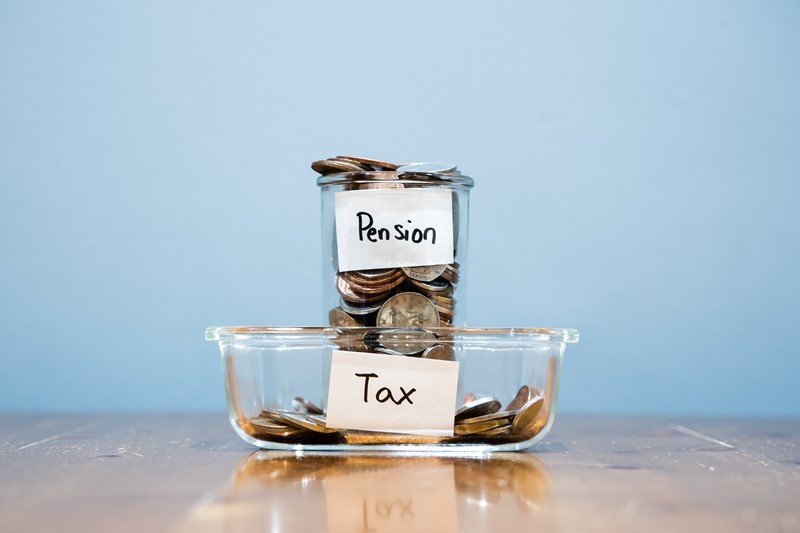
Under current rules, you can claim tax relief for your private pension contributions within certain limitations.

The current annual allowance for tax relief on pension contributions is £40,000. You can also carry forward any unused amount of your annual allowance from the last three tax years if you have made pension savings in those years.

Additionally, there is a lifetime limit for tax relief on pension contributions. The limit is currently £1,073,100.

You can qualify for tax relief on private pension contributions worth up to 100% of your annual earnings, subject to the overriding limits. Tax relief is paid on pension contributions at the highest rate of Income Tax paid.

This means that if you are:

  • A basic rate taxpayer qualifies for 20% pension tax relief.
  • A higher rate taxpayer qualifies for 40% pension tax relief.
  • An additional rate taxpayer qualifies for 45% pension tax relief.

The first 20% of tax relief is usually applied by your employer with no further action required. If you are a higher rate or additional rate taxpayer, you can claim back any further reliefs on your Self-Assessment tax return.

The above applies for claiming tax relief in England, Wales or Northern Ireland. There are regional differences if you are based in Scotland.

Gifts paid out of disposable income

It is possible for wealthier taxpayers to make tax exempt gifts and payments that are funded as normal expenditure out of income. This is a very flexible exemption from IHT as there are no specific requirements, for example by making fixed regular gifts to the same person. With proper planning this can be a very useful tool including enabling grandparents to help pay school fees for their grandchildren.

However, careful consideration has to be given to ensure that these payments form part of the transferor’s normal expenditure and is made out of income and not out of capital. The person gifting the money must also ensure that they are left with enough money for them to maintain their normal standard of living out of their regular income after making the gift.

HMRC’s internal manual states that although the normal expenditure gifts must have left the transferor with ‘sufficient income’ to maintain their usual standard of living, they do not need to have actually used this for living expenses. The transferor may in fact choose to use capital to meet their living expenses and use the income remaining, after making the gifts, for some other purpose. It is enough, for the exemption to apply, that the income was enough to meet both the normal expenditure gifts and the usual living expenses.

If the income that is left after making the gifts is not enough to meet the usual living expenses, the exemption is not available in full, but part of the gifts may still qualify for the exemption.

Autumn Statement Summary

The new Chancellor of the Exchequer, Jeremy Hunt, has delivered his Autumn Statement to the House of Commons against a backdrop of a worsening cost of living crisis and with confirmation from the Office for Budget Responsibility OBR that the UK has now entered into a recession.

The OBR has stated that the economy is still forecast to grow by 4.2% this year. GDP is then predicted to fall by 1.4% in 2023, before rising by 1.3% in 2024.

As expected, the Chancellor set out billions of pounds in tax increases and spending cuts to continue the restoration of market stability after the disastrous mini-budget.

The following summary of the measures announced by the Chancellor as part of the Autumn Statement measures is split into two sections:

  1. Taxation changes
  2. Other announcements

Please call if you need to discuss how these changes may affect your business or tax affairs in the coming months.

Taxation changes

Income Tax

The Chancellor has announced that the Income Tax additional rate threshold will be reduced from £150,000 to £125,140 with effect from 6 April 2023. This move will see an estimated 250,000 further taxpayers pay the additional rate of Income Tax of 45% from next April.

It had been previously announced that there would be no increase in the Income Tax Personal Allowance and higher rate threshold until April 2026. The Chancellor has now confirmed that the thresholds will be maintained at their current levels for a further two years until April 2028. Higher rate threshold will remain frozen at £37,700 and the personal tax allowance will remain at £12,570 through to April 2028.

This is effectively a “stealth tax” increase. Wage earners benefitting from annual increases in their earnings up to April 2028 will find themselves paying tax on the full value of any increases. This is because, with personal allowances frozen until April 2028, any increases in earnings will be taxed and, in some cases, this may push earnings into the higher rate tax bands especially for those who will now be subject to the 45% rate (with its new reduced limit).

Regional variations to Income Tax rates may apply in Wales and Scotland.

Income Tax and dividend income

The current £2,000 dividend tax-free allowance is to be reduced to £1,000 from April 2023 and to £500 from April 2024.

The 1.25% increase in the tax rates payable on dividend income, which took effect in April 2022 remains in place.

The rates that apply in all regions of the UK from 6 April 2023 are as follows:

  • Dividends that form part of the basic rate band – 8.75%
  • Dividends that form part of the higher rate band – 33.75%
  • Dividends that form part of the additional rate band – 39.35%

Inheritance Tax

No changes to present rates and allowances were announced. These rates and allowances will remain frozen at current levels until April 2028.

The nil-rate band will continue to be £325,000 and the residence nil-rate band at £175,000, for this period.

Stamp Duty Land Tax

On 23 September 2022, the then Chancellor, Kwasi Kwarteng, announced a permanent increase in the SDLT nil rate band to £250,000 (from £125,000). There was also an increase in the nil-rate threshold for first-time buyers making a purchase of up to £425,000 (from £300,000). The first-time buyers relief also increased the nil-rate threshold to £425,000 (from £300,000) for first-time buyers of properties costing up to £625,000 (from £500,000). There is no relief available for first-time buyers spending more than £625,000 on a property. There are a number of requirements that must be met in order to qualify for the relief.

These changes were one of the only surviving measures from the mini-Budget. It was announced as part of the Autumn Statement that these measures will remain but as a temporary SDLT reduction until 31 March 2025 and not as a permanent change as originally announced.

It is important to note that these measures apply to England and Northern Ireland only. Any changes to the Land and Buildings Transaction Tax in Scotland or the Land Transaction Tax in Wales would be announced separately.

National Insurance

The Chancellor also confirmed that the National Insurance contributions (NICs) Upper Earnings Limit (UEL) and Upper Profits Limit (UPL) that were already fixed at their current levels until April 2026 will now be maintained for an additional two years until April 2028.

The 1.25% rise in National Insurance contributions (NICs) that came into effect at the start of the 2022-23 tax year on 6 April 2022 was reversed on 6 November 2022. There have been no further changes announced and the cancellation of the ring-fenced Health and Social Care Levy of 1.25% due to be introduced from April 2023 remains in place and will not go ahead as originally planned.

The alignment of the Primary Threshold (PT) for Class 1 NICs and Lower Profits Limit (LPL) for Class 4 NICs with the personal allowance of £12,570 that came into effect on 6 July 2022 will stay at this level until April 2028.

The government will fix the Lower Earnings Limit (LEL) and the Small Profits Threshold (SPT) at 2022- 23 levels in 2023-24. The LEL will remain at £6,396 per annum (£123 per week) and the SPT will remain at £6,725 per annum. The Upper Secondary Threshold will stay fixed at £50,270 per annum until April 2028, to remain aligned with the UEL and UPL.

The government will use the September CPI figure of 10.1% to uprate the Class 2 and Class 3 NICs rates for 2023-24. The Class 2 rate will be £3.45 per week, and the Class 3 rate will be £17.45 per week.

Capital Gains Tax

The Chancellor announced a significant reduction in the annual exempt amount applicable to Capital Gains Tax (CGT). This rate had previously been fixed at £12,300 from April 2021 to April 2026 for individuals, personal representatives, and some types of trusts for disabled people.

The exempt amount will now be reduced to £6,000 from April 2023 before being further reduced to £3,000 from April 2024.

Corporation Tax

The Chancellor had previously announced on 17 October 2022 that the planned increases in Corporation Tax (CT) rates from April 2023 would be going ahead.

From1 April 2023, there will be two rates of CT.

  • Taxable profits up £50,000 will continue to be taxed at 19%.
  • Taxable profits more than £250,000 will be taxed at the main rate of 25%.
  • Profits between £50,000 and £250,000 will be subject to a marginal tapering relief. This would be reduced for the number of associated companies and for short accounting periods.

Corporation Tax and banking companies

From 1 April 2023, the rate of surcharge on banking companies will be 3% and the surcharge allowance will increase from £25m to £100m.

Diverted Profits Tax

The rate of Diverted Profits Tax will increase from 25% to 31% from 1 April 2023. This will maintain the 6% differential above the main rate of CT.

Corporation Tax – R&D Relief

The Research and Development Expenditure Credit (RDEC) rate will increase to 20% (from 13%) with effect from 1 April 2023. From the same date, the small and medium-sized enterprises (SME) additional deduction will decrease from 130% to 86%, and the SME credit rate will decrease from 14.5% to 10%.

R&D tax reliefs will be reformed to support modern research methods by expanding qualifying expenditure to include data and cloud costs. This will effectively capture the benefits of R&D funded by the reliefs through refocusing support towards innovation in the UK, and target abuse and improve compliance. These changes will be legislated for in the Spring Finance Bill 2023.

Windfall Taxes

The Energy Profits Levy (EPL) will increase to 35% (from 25%), effective 1 January 2023. The investment allowance will be reduced from 80% to 29% for qualifying investment expenditure thereby maintaining its existing cash value. The Levy is scheduled to end on 31 March 2028, raising £40 billion over the next 6 years. This will bring the headline tax rate for the sector to 75%.

The Chancellor also announced the introduction of a temporary Electricity Generator Levy. This will see a temporary 45% tax that will be levied on certain extraordinary returns from low-carbon UK electricity generation. The tax will apply to extraordinary returns arising from 1 January 2023.

Vehicle Excise Duty (VED)

VED will become applicable on electric cars, vans and motorcycles from April 2025 in the same way as it currently applies to petrol and diesel vehicles. This change will apply to new and existing zero emission cars.

Company Car Tax

The rates of company car tax that apply until April 2028 have been announced in order to provide long term certainty for taxpayers and industry.

The rates will continue to incentivise the take up of electric vehicles:

  • The appropriate percentages for electric and ultra-low emission cars emitting less than 75g of CO2 per kilometre will increase by 1% in 2025-26; a further 1% in 2026-27 and a further 1% in 2027-28 up to a maximum appropriate percentage of 5% for electric cars and 21% for ultra-low emission cars.
  • The rates for all other vehicles bands will be increased by 1% for 2025-26 up to a maximum appropriate percentage of 37% and will then be fixed in 2026-27 and 2027-28.

First Year allowances for electric charging points

Businesses can currently benefit from First Year allowances on qualifying electric charging points for cars and vans. To qualify for the relief the company must use the charging point in their own business. This relief was set to expire in 2023 but has now been extended for a further two years, to 31 March 2025 for Corporation Tax purposes and to 5 April 2025 for Income Tax purposes.

VAT

There will be no changes to the 20% rate. The £85,000 registration limit and the £83,000 deregistration limit will now remain at these levels until 31 March 2026.

Other announcements

National Living Wage increases

The NLW will increase to £10.42 per hour (previously £9.50) from 1 April 2023.

The full changes to the National Minimum Wage rates from 1 April 2023 are as follows:

  • The 21 to 22 year-old rate will be £10.18 per hour
  • The 18 to 20 year-old rate will be £7.49 per hour
  • The 16 to 17 year-old rate will be £5.28 per hour
  • The apprentice rate will be £5.28 per hour

Council Tax flexibility

The government is to raise the cap on the level of council tax rises by increasing the referendum limit for council tax rises to 3% per year from April 2023.

Business rates

Business rate bills in England will be updated from 1 April 2023 to reflect changes in property values since the last revaluation in 2017. A package of targeted support worth £13.6 billion has been announced to help support businesses with this change as well as increased costs.

These measures are as follows:

  • Freezing the business rates multiplier for another year
  • Extended and increased relief for retail, hospitality and leisure businesses
  • Reforming Transitional Relief
  • Protection for small businesses who lose eligibility for either Small Business or Rural Rate Relief.

Energy price guarantee scheme

The Chancellor announced that the energy price guarantee scheme which will see the average household have their energy bills capped at £2,500 a year will remain in place until the 31 March 2023.

From 1 April 2023, this guarantee will change so that the typical household will pay on average £3,000 a year (an increase of £500). This will save the Exchequer around £14 billion next year while still saving the typical household £500 a year off their energy bills, compared to the price of the energy price cap.

The government will also double to £200 the level of support for households that use alternative fuels, such as heating oil, LPG, coal or biomass, to heat their homes. 

Cost of Living Payments

The Cost of Living support package to help over 8 million households in receipt of mean tested benefits is to be extended. This will see an additional Cost of Living Payment of £900 in 2023-24. The payments will be made in more than one instalment. DWP and HMRC will provide further detail on timing of these payments and eligibility dates in due course.

There will also be a new Cost of Living payment for pensioners who will receive an additional £300 and an additional £150 payment for those on non-means-tested disability benefits in 2023-24.

Benefits Uprating

The government will also raise benefits, including working age benefits and the State Pension, in line with inflation from April 2023.  These payments will rise by September Consumer Price Index (CPI) inflation – 10.1%. As a result of uprating these working age and pension benefits around 19 million families will see their benefit payments increase from April 2023.


Tax on dividends

The dividend tax allowance was first introduced in 2016 and replaced the old dividend tax credit with an annual £5,000 dividend allowance. Tax was payable on dividends received over this amount. The tax-free dividend allowance was reduced to £2,000 with effect from 6 April 2018 and has remain fixed at that level ever since.

This means that the tax rates for dividends received in 2022-23 (in excess of the dividend tax allowance) are taxed as follows:

  • 8.75% for basic rate taxpayers will pay tax on dividends;
  • 33.75% for higher rate taxpayers will pay tax on dividends; and
  • 39.35% for additional rate taxpayers will pay tax on dividends.

These figures include the 1.25% increase in dividend tax rates that came into effect on 6 April 2022 alongside the 1.25% increase in NIC contribution rates. H M Treasury has confirmed that the plan to cut dividend tax rates from April 2023 announced as part of the mini-budget measures has been cancelled.

It remains to be seen if any further changes to the way dividends are taxed will be announced as part of the Autumn Statement. It is possible that there could be further increases in the tax rates or a reduction in the tax-free dividend allowance.

Dividends that fall within your Personal Allowance do not count towards your dividend allowance and you may pay tax at more than one rate.

If you receive up to £10,000 in dividends you can ask HMRC to change your tax code and the tax due will be taken from your wages or pension or you can enter the dividends on your Self-Assessment tax return, if you already fill one in. You do not need to notify HMRC if the dividends you receive are within your dividend allowance for the tax year.

If you have received over £10,000 in dividends, you will need to complete a Self-Assessment tax return. If you do not usually send a tax return, you need to register by 5 October following the tax year in which you had the relevant dividend income.

What your tax code means

The letters in your tax code signify your entitlement (or not) to the annual tax-free personal allowance. The tax codes are updated annually and help employer’s work out how much tax to deduct from an employee’s pay packet. 

The basic personal allowance for the current tax year, which started on 6 April 2022, is £12,570. The corresponding tax code for an employee entitled to the standard tax-free Personal Allowance 1257L. This is the most common tax code and is used for most people with one job and no untaxed income, unpaid tax or taxable benefits (for example a company car).

There are many other numbers and letters that can appear in your tax code. For example, there are letters that show where an employee is claiming the marriage allowance (M) or where their income or pension is taxed using the Scottish rates (S). The basic rate limit for 2022-23 is £37,700 except for those defined as Scottish taxpayers who have a lower basic rate limit as well as an intermediate rate. If your tax code numbers are changed this usually means your personal allowance has been reduced.

There are also emergency tax codes (W1 or M1) which can be used if a new employee doesn’t have a P45. These codes mean that an employee’s tax calculation is based only on what they are paid in the current pay period.

If your tax code has a 'K' at the beginning, this means that deductions due for company benefits, state pension or tax owed from previous years are greater than your personal allowance. However, the tax deduction for each pay period can’t be more than half your pre-tax pay or pension.

It is important to check your tax code to ensure the correct information is being used. If you have any queries we can help, or you can check with your employer or HMRC.

Check a UK VAT number

The ability to check a UK VAT number is available at: www.gov.uk/check-uk-vat-number.

This service allows users to check:

  • if a UK VAT registration number is valid; and
  • the name and address of the business the number is registered to.

The service also allows UK taxpayers to obtain a certificate to prove that they checked that a VAT registration number was valid at a given time and date. The certificate will provide valuable evidence for a taxpayer to prove that they acted in good faith should HMRC challenge input tax recovery or seek payment of lost VAT.

The European Commission website also includes an on-line service which allows taxpayers to check if a quoted VAT number from anywhere in the EU is valid. The on-line service is available at: https://ec.europa.eu/taxation_customs/vies/#/vat-validation

HMRC launch offshore property owners campaign

It has been reported by the Chartered Institute of Taxation (CIOT) that HMRC is to launch a new campaign to tackle non-compliance linked to offshore corporates owning UK property. HMRC has conducted a review of non-resident corporate owners of UK property using data from the Land Registry and other sources. This review has helped HMRC identify offshore property owners that may not have fully met their UK tax obligations. 

HMRC is now expected to write to those identified, encouraging them to review their UK tax position and if necessary to make a disclosure to HMRC if any issues are identified. There are two different letters that may be sent. The first, titled ‘Disclosure for Annual Tax on Enveloped Dwellings/Non-Resident Landlord liabilities’ and the second titled ‘Disposal of interest in UK residential property’. Both letters also recommend that the companies should ask connected UK-resident individuals to ensure their personal tax affairs are up to date in respect of the related anti-avoidance provisions. 

There are higher penalties for offshore tax non-compliance. In certain circumstances, these penalties may be reduced. The largest reductions are for unprompted disclosures. The penalty also varies depending on whether the errors are careless, non-deliberate, deliberate or deliberate and concealed.

It should also be noted that a new Register of Overseas Entities was recently launched by Companies House. This register requires overseas entities that own land or property in the UK to declare their beneficial owners and / or managing officers. Overseas entities that already own UK property are required to register with Companies House and provide details of their registrable beneficial owners and / or managing officers by 31 January 2023. This applies to overseas entities who bought property or land on or after 1 January 1999 in England and Wales, 8 December 2014 in Scotland and on or after 1 August 2022 in Northern Ireland. 

Claiming Corporation Tax losses

Corporation Tax relief may be available where a company or organisation makes a trading loss. The loss may be used to claim relief from Corporation Tax by offsetting the loss against other gains or profits of the business in the same accounting period.

It is also possible to carry a trading loss back in order to claim relief from Corporation Tax by offsetting the loss against profits in previous years. Carrying back a trading loss allows companies to seek relief for the losses by carrying them back to an earlier profit-making period resulting in a reclaim of Corporation Tax.

Usually, such a claim can only be made once a Corporation Tax return has been prepared and submitted to HMRC. Losses may only be carried back against profits of a preceding accounting period if the company was carrying on the trade (in which the loss was incurred) at some time in that accounting period.

Any claim for trading losses forms part of the Company Tax Return. The trading profit or loss for Corporation Tax purposes is worked out by making the usual tax adjustments to the figure of profit or loss shown in the company’s or organisation’s financial accounts.

It is also possible for certain losses that a company has not used in the same accounting period or carried back to be offset against profits in future accounting periods.